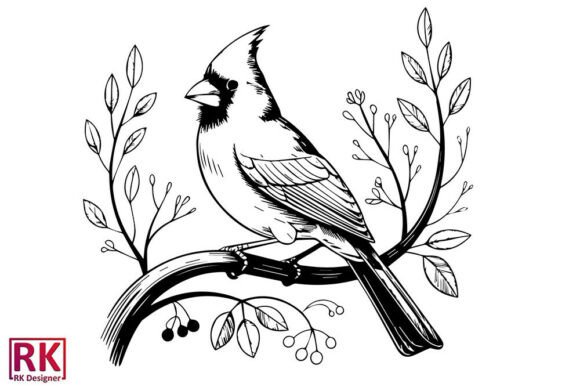
Cardinal Bird SVG: A Designer’s Real-World Embroidery Review
First Impression: Bold, Seasonal, and Surprisingly Versatile
Opening the Cardinal Bird SVG file, I immediately felt its quiet confidence—it’s not fussy, but it carries unmistakable presence. The silhouette is clean and slightly stylized, with a subtle nod to the cardinal’s distinctive crest and compact posture. It reads as “winter” without being cliché: no snowflakes or bare branches attached, just the bird itself—strong, grounded, and full of quiet warmth. That simplicity is exactly what makes this design feel like a keeper for real embroidery projects, not just another seasonal graphic.
Where It Shines: From Tote Bags to Nursery Decor
I tested Cardinal Bird SVG on a medium-weight cotton canvas tote bag first—no appliqué, just direct embroidery using satin stitch for the outline and soft fill stitch for the body. The result? Crisp, legible, and instantly recognizable at 3.5 inches tall. Customers browsing a boutique booth or Etsy listing would pause—not because it’s flashy, but because it feels intentional and handmade in the best way.
It also translated beautifully onto a lightweight baby onesie (with tear-away stabilizer and reduced stitch density), holding shape without puckering. On a dark navy sweatshirt? Paired with a warm red thread, it popped without screaming—ideal for small shop merchandise that balances personality with wearability. And yes, I even stitched it onto a curved cap front: the clean lines and minimal interior detail meant it didn’t fight the surface. No distortion, no skipped stitches—just a confident, polished finish.
Where to Proceed Thoughtfully
This isn’t a one-size-fits-all embroidery file—and that’s a good thing. Its strength lies in clarity, not intricacy, so it’s not ideal for ultra-small hoop work (under 2.5 inches) where fine beak or eye details might blur. On highly textured fabrics like thick terry cloth or bouclé, I’d recommend testing stitch density first; too much fill can overwhelm the texture instead of complementing it.
For stretchy knits—think crewneck tees or baby leggings—use a light cutaway stabilizer and consider simplifying the fill area manually if your software allows. On very thin fabrics (like voile or lightweight linen), avoid dense satin borders unless you’re layering stabilizer carefully. And while it works well on dark fabric, keep in mind that red thread may mute slightly on black or charcoal; always test contrast with your actual thread spools before stitching a finished product.
Design Integrity Meets Commercial Practicality
What stands out about Cardinal Bird SVG is how it supports brand consistency—not just for craft businesses, but for makers who want their handmade product to feel cohesive across formats. I used it as both an embroidered patch (heat-applied backing) and a printable mockup for an Etsy listing, and the visual language held up seamlessly. That kind of flexibility matters when you’re juggling multiple sales channels: craft fairs, online shops, wholesale orders.
Customers respond well to designs that feel both personal and professional—and this one does. A holiday embroidery on a kitchen towel? Warm, nostalgic, gift-ready. A single cardinal on a linen pillow cover for a nursery? Calm, meaningful, quietly elegant. It avoids trend fatigue because it leans into timeless symbolism rather than seasonal gimmicks.
Practical Notes Every Embroidery Designer Should Check
- Always test on scrap fabric first—especially when switching between cotton, knit, and woven blends.
- Review stitch density before scaling up or down; denser fills add stability but increase wear on delicate fabrics.
- Confirm hoop size compatibility—this design fits comfortably in a 4x4 hoop, but verify exact dimensions in your software before digitizing further.
- Inspect small corners and curves—the beak and crest are defined, but not overly tight; still, zoom in to ensure no tiny jump stitches or overlapping paths.
- Test in black-and-white mockups—it helps assess value contrast before committing to thread colors.
- Compare light vs. dark backgrounds visually—even a simple white-on-navy versus navy-on-cream tells you how readable it’ll be in real life.
- Use appropriate stabilizer: medium tear-away for stable wovens, light cutaway for knits, and fusible for lightweight linens.
- Verify licensing terms before selling finished items or bundling Cardinal Bird SVG into digital product kits—since it’s listed as a digital download for Crafts and Graphics, commercial use may require clarification from the seller.
Final Thought: A Reliable Anchor in Your Design Toolkit
As someone who evaluates dozens of embroidery files each month—whether for client apparel projects, small-batch boutique runs, or personalized gifts—I don’t reach for every “cute” bird design. But Cardinal Bird SVG earns repeat use because it’s balanced: simple enough to stitch cleanly across fabric types, expressive enough to carry meaning, and versatile enough to support both heartfelt handmade products and scalable craft business needs.
It won’t replace your go-to monogram or signature script—but it *does* fill a quiet, valuable gap: a nature-inspired motif that feels fresh year after year, works across genders and ages, and adds sincerity without sentimentality. Whether you’re embroidering a holiday gift for a neighbor, building a cohesive Etsy collection around seasonal themes, or developing a line of small shop merchandise with consistent visual rhythm, Cardinal Bird SVG holds its ground.
Just remember: great embroidery starts with thoughtful selection—not just beautiful graphics, but designs that behave well under needle, respect fabric, and resonate with people holding the finished product in their hands.